The Terrathesis Team
The projects are developed in close collaboration with partners from research and practice. The aim is not only to communicate topics, but to make perspectives visible and enable new forms of exchange.
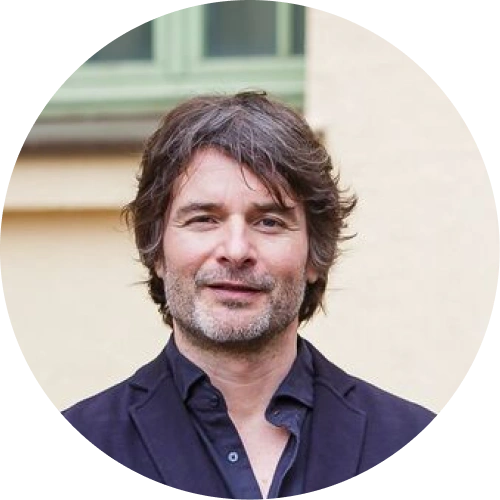
Dr. André Nebe
Project Lead
André F. Nebe has been working in science communication at Film University Babelsberg KONRAD WOLF in Potsdam-Babelsberg since completing his doctorate in 2017. As part of several projects funded by the German Federal Ministry of Education and Research (BMBF), he has, among other things, developed a modular, year-round curriculum for media education in primary and secondary schools. This curriculum is available free of charge to teachers in the form of manuals and e-learning videos at www.classroomfilms [dot] de.
As a lecturer, he has taught lectures and seminars at institutions including Film University Babelsberg KONRAD WOLF, Macromedia University of Applied Sciences for Media, DEKRA Media University in Berlin, Darmstadt University of Applied Sciences, the German Film Institute in Frankfurt/Main, as well as at various professional conferences.
He completed his doctoral dissertation on the topic “Humour and successful children's films - Structures and relevance of a cinematic medium”
After completing his law studies at Humboldt University in Berlin, specializing in copyright and media law, he studied film directing under Hark Bohm at the University of Hamburg. Since 2004, he has also been working as a freelance director, writer, and producer in the film and television industry.
In addition to several feature film projects as a writer funded by Medienboard Berlin-Brandenburg, the German Federal Film Board (FFA), and the State Chancellery of Thuringia, he has written scripts and contributions for productions such as ZDF’s Löwenzahn and the SWR. His international feature film debut, “The Race” (original title: Das große Rennen), starring Colm Meaney and Susan Lynch, was released in cinemas in 2009. As a director, writer, and producer, he has gained extensive practical experience across a wide range of genres, formats, and audiovisual storytelling techniques.
André F. Nebe is also the author of two children’s book series:
The Ghost Riders (2 volumes), published by Baumhaus
The Coastal Wolves (5 volumes), published by Biber & Butzemann
His dissertation was also published in English by Springer in 2023 under the title “Humour and Successful Children’s Films.”
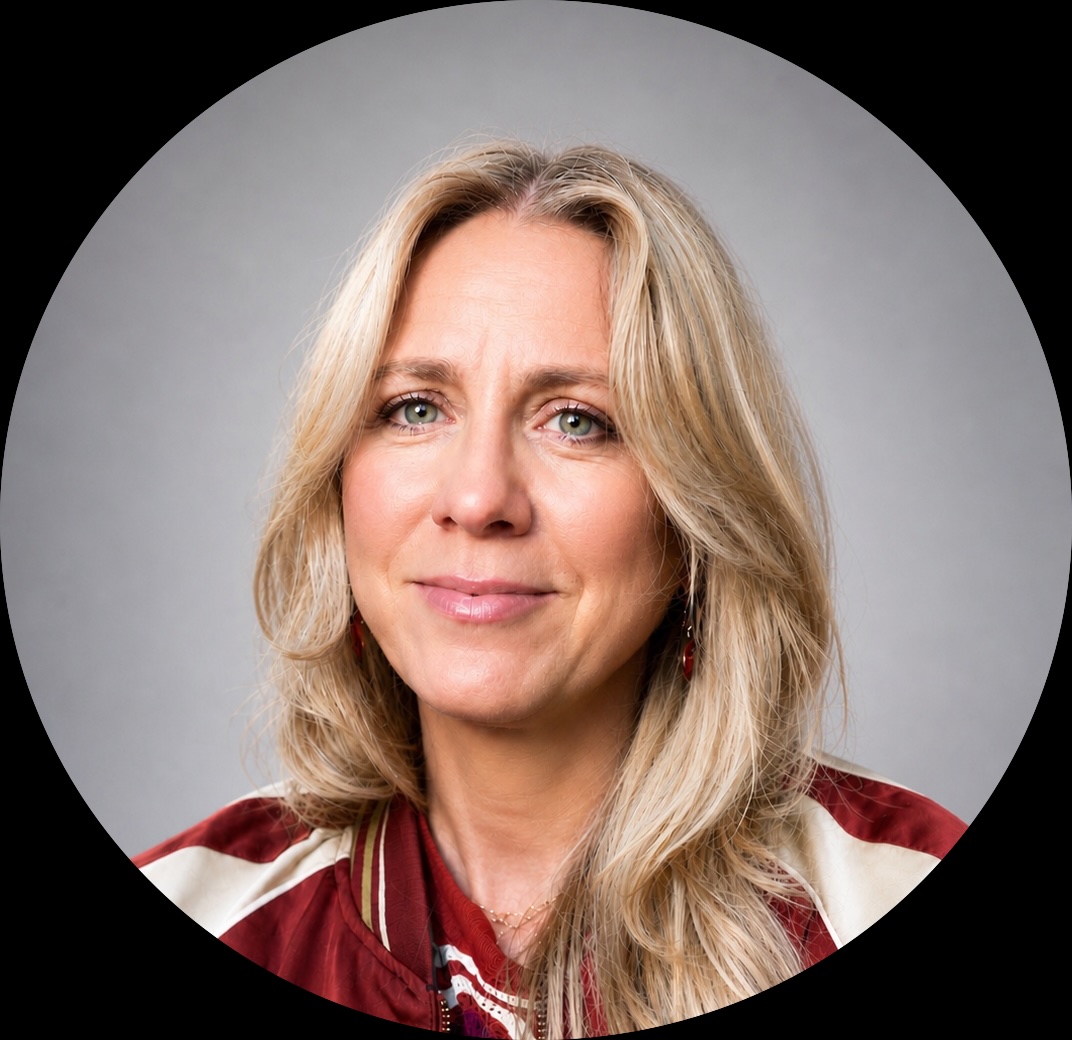
Dr. Katrin von Kap-herr
Senior Researcher for Transmedia Narrative Strategies and Storytelling
Biography Katrin
Katrin von Kap-herr is a Senior Researcher for Transmedia Narrative Strategies and Storytelling at Film University Babelsberg KONRAD WOLF. Prior to this role, she worked there on a research project funded by the German Federal Ministry of Education and Research (BMBF). She also teaches as a research associate in the European Media Studies program—a joint degree offered by the University of Potsdam and Potsdam University of Applied Sciences—as well as in the Design Department at the latter institution.
In 2017, she completed her doctorate in Media Studies at the University of Potsdam with a dissertation on digital visual effects in contemporary cinema. Since then, her research has focused on the intersection of media aesthetics, narrative, and knowledge communication.
As part of the Terrathesis research project, she develops transmedia formats that bring together perspectives from agriculture, science, politics, and practice. These include podcast, interview, and audiovisual formats designed to make complex topics accessible while highlighting diverse viewpoints.
She is also a co-founder of the Science Sisterhood network, which promotes the visibility and networking of women in academia. In both her teaching and project work, she regularly develops experimental formats at the intersection of media, technology, and communication. For example, in collaboration with the Media Innovation Center Babelsberg, she co-developed an interactive escape room on artificial intelligence with students. In partnership with ALEX Berlin, she also created several talk show formats on socially relevant topics (“Talkbox”), which were broadcast on television.
Another focus of her work is the development of educational formats in the field of media literacy. As part of the Classroomfilms project, she collaborated with André Nebe and Tim Augurzke to develop modular teaching concepts, manuals, and e-learning videos for use in schools.
In addition to her academic work, she is involved in various research and media projects and regularly collaborates with stakeholders from different sectors of society. Her teaching and science communication have been recognized with several awards, including the Brandenburg Teaching Award and the Potsdam Audience Award for Science Communication.
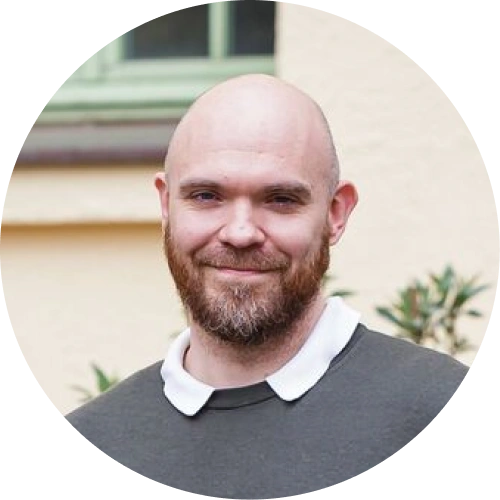
Tim Augurzke
Head of Production
Tim Augurzke has been working as a production manager on various projects at Film University Babelsberg KONRAD WOLF since 2015. Since 2019, he has continuously served as production manager on several research projects funded by the German Federal Ministry of Education and Research (BMBF) and the Volkswagen Foundation.
Between 2021 and 2024, he also worked as a producer on selected projects. Since 2024, he has been one of the heads of production at Film University Babelsberg KONRAD WOLF.
With more than eleven years of experience across a wide range of production levels, he has extensive expertise in the planning, coordination, and execution of audiovisual projects. In parallel, he works independently as a production manager for external clients, where he oversees the entire audiovisual production process.
As a lecturer, he has taught seminars at institutions including the University of Potsdam and Potsdam University of Applied Sciences. His courses include “Box Office Dynamics: Structures, Mechanisms, and Success Factors in Film Financing” and “Concept and Project Development: Feature Film Production – From Development to Mastering.”

Implementation
The project “terrathesis” (MEDIAG) is being implemented by the Filmuniversität Babelsberg KONRAD WOLF.

Funding
The Terrathesis (MEDIAG) project is funded by the VolkswagenStiftung. The funding supports the development and testing of new forms of collaboration between media production, academic research, and practice.

Project partner
As a project partner in the ‘terrathesis’ (MEDIAG) project, tamen. Entwicklungsbüro Arbeit und Umwelt GmbH (https://tamen.de/) supports the dialogue, learning and educational processes of those involved in the project. In its role as a facilitator, it brings together different perspectives and supports joint discussion on the challenges facing the agricultural sector.

Specialist Agricultural Advisory Services
The “terrathesis” (MEDIAG) project is being carried out in collaboration with the Eberswalde University for Sustainable Development.
Contributing Practice Partners
Terrathesis thrives on collaboration with people and organisations from academia, professional practice, politics and civil society.

- Johannes Funke SPD Parliamentary Group in the Brandenburg State Parliament
- Leon Gehde Schleswig-Holstein Nature Conservation Foundation
- Maxie Grüter Institute for Food and Environmental Research (ILU e.V.)
- Anke Hermann Brandenburg Ministry of Agriculture and Food, Environment and Consumer Protection
- Susanne Hofmann-Souki Humboldt University of Berlin (Agricultural Economics) / Brochwitz GmbH
- Karla Jabben Otto GmbH & Co. KG
- Jens Kath Teaching Sheep Farm
- Lena Kolbow Berlin Senate / Brandenburg Farmers’ Association (LBV)
- Andreas Kraus Berlin Senate Department for Mobility, Transport, Climate Action and the Environment
- Lukas Landgraf Brandenburg State Office for the Environment
- Vera Luthardt Eberswalde University for Sustainable Development (HNEE)
- Peter Spathelf Eberswalde University for Sustainable Development (HNEE)
- Conny Mehl biota – Institute for Ecological Research and Planning GmbH
- Jennifer Merten NABU (Nature and Biodiversity Conservation Union)
- Stephan Reimann Water & Peatlands
- Roland Simon Forestry Office
- Martin Szaramowicz Brandenburg Land Agency
- Doris Triebsch Rural Women’s Association, Netzen Local Chapter
- Stephan Warnken Huxfeld Farm
- Elena Zydek Schleswig-Holstein Nature Conservation Foundation
- Ludwig Bork Agrotherm GmbH
- De la Barré de la Barré Rattan and Solid Wood Workshop
- Thorsten Galke Moor and More
- Patrick Gutjahr Friedrich Loeffler Institute – Federal Research Institute for Animal Health
- Thomas Hartmann tamen. Development Office for Work and the Environment
- Katja Hesse Brandenburg Economic Development Agency (WFBB)
- Sophie Hirschelmann Michael Succow Foundation / Greifswald Mire Centre
- Robert Jäkel Natur Konkret (Guido Leutenegger GmbH)
- Janina Löbel Brandenburg Economic Development Agency (WFBB)
- Juliane & Sebastian Petri Moorhofer Grassland Farm
- Lutz Rohland Bergwaldprojekt e.V. (Mountain Forest Project)
- Ivonne Schulz “Uckerseen” Water and Soil Association
- Robert Schulz Uckermark agrar Agricultural Cooperative
- Henrik Wendorff Brandenburg Farmers’ Association (LBV)
- Laura Wiegand Association for Technology and Structures in Agriculture (KTBL)


